| |
| Tuesday, 10 November 2026 |
| Christmas - backstage at Covent Garden |
| Sarah Lenton |
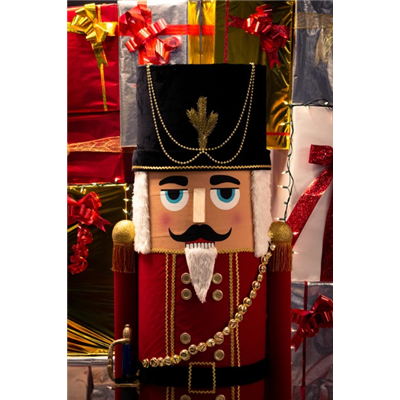 |
Every year the Royal Opera House puts on a season of Christmas shows: the Royal Ballet in Nutcracker and Cinderella, the Royal Opera in any piece with a folk tale theme, and either genre if it features snow. How do we cope with all those magic coaches and snow bags? Not to say 17 Sugar Plums, 12 Princes and the entire Lower Ballet School backstage? This talk takes you into the wings, down the traps and under the stage as our legendary Christmas Tree is moved on to its lift. Based on interviews and live video clips, it is updated every year. Image credit Sambecerra |
|
| Tuesday, 12 January 2027 |
| Islamic Spain: Cordoba and Granada |
| Sue Rollin |
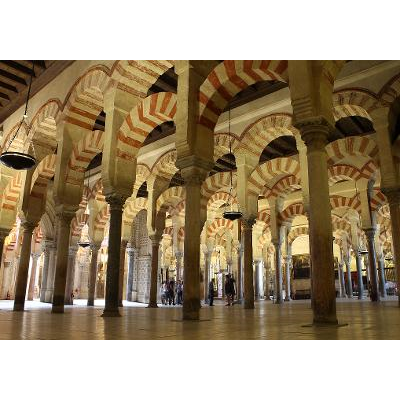 |
For almost 800 years Arab -Berber dynasties from North Africa and beyond ruled over all or part of southern Spain, which they called al-Andalus: where they developed a highly sophisticated and original culture. Al-Andulus was home to some of the most beautiful and accomplished art and architecture of medieval Europe and the wider Islamic world. In Cordoba, celebrated lcentre of learning and seat of the Umayyad caliphate, the Great Mosque displays glittering gold and coloured glass mosaics with floral and vegetal designs perhaps intended to invoke paradise. |
|
| Tuesday, 09 February 2027 |
| Marc Chagall: Wandering Jew or Citizen of the World |
| Monica Bohm-Duchen |
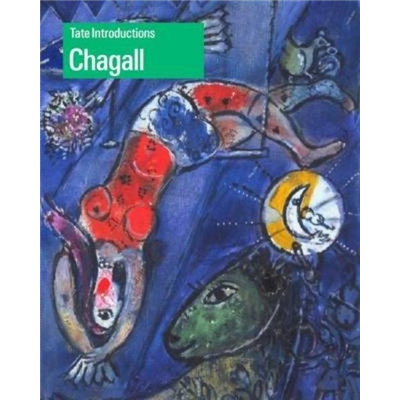 |
As his work makes abundantly clear, Marc Chagall (1887 - 1985) remained deeply loyal to his humble Russian-Jewish origins. Yet he also wished his art to have a universal appeal - which, judging by its' popularity, it undoubtedly achieved. This lecture will trace his long, chequered and colourful career, giving particular emphasis to the creative tensions produced by the very different cultural and artistic environments in which he found himself: starting with his hometown of Vitebsk (up to 1906), then St Petersburg (1906 - 10), Paris (1910 - 14), Revolutionary Russia (1914 - 22), Berlin (1922 - 3), Paris (again 1922 - 40), America during World War Two, and back to France in 1948. |
|
| Tuesday, 09 March 2027 |
| The Influence of Japanese Woodcuts on Western Art |
| Carol Wilhide Justin |
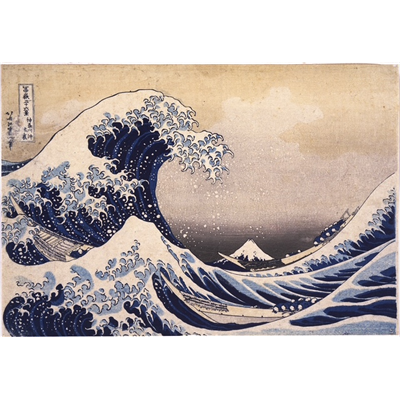 |
When Japan's borders were opened to the West in 1868 there was a huge surge of interest in all things Japanese in the West, particularly in Paris. Ukiyo-e prints were collected avidly by leading impressionist painters of the day who "borrowed" wholesale from their asymmetric compositions, flowing lines, bright colours and subject matter. In this lecture I explore how the Japanese aesthetic revolutionised Western art in the late 19th century and how a new wave of artists today have brought a deeper understanding of the mokuhanga technique into Contemporary Art. Image courtesy of The Art Institute of Chicago |
|
| Tuesday, 13 April 2027 |
| Madly Inspired: the Life and Work of Richard Dadd |
| Nicole Mezey |
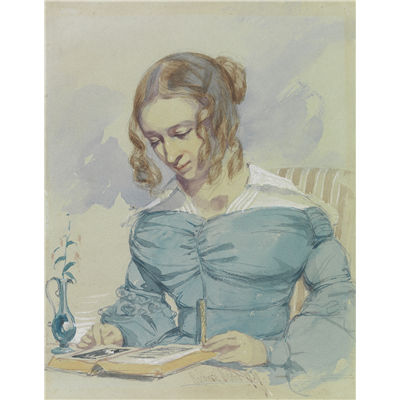 |
One of the most promising artists of his generation, Richard Dadd was forgotten to the world for the last few years of his life. In 1843, at the age of 26, he stabbed his father to death, convinced that he was the Devil Incarnate. Convicted as a 'criminal lunatic', Dadd spent his remaining years secluded in Bethlehem Hospital and Broadmoor, where he continued to draw and paint, exploring over and over again images from the world he had left behind but above all developing the fantasy and fairy pictures with which he is now so associated and were to influence later creations from Arthur Rackham to Freddie Mercury. Image courtesy of Yale Center for British Art |
|
| Tuesday, 11 May 2027 |
| The Dutch Golden Age in Six Paintings |
| Mariska Beekenhamp-Wladimiroff |
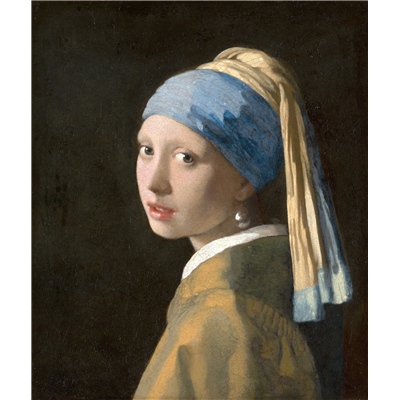 |
The 17th century in the Netherlands, referred to as the Dutch Golden Age, was the time of Rembrandt and Vermeer, of extraordinary riches and incredible progress. There may be no other country in which in the brief span of a hundred years so many paintings were executed. You will be hard to find a museum in the world not housing at least on Dutch painting from the Golden Age! This talk will use 6 paintings to introduce how the arts flourished in this tiny republic during this period, With the help of these 6 paintings we will talk about the Dutch, their cities, landscape, society, beliefs and artistic genres. Image courtesy of Mauritshuis, The Hague |
|
| Tuesday, 08 June 2027 |
| From Penal Colony to Sovereign Nation |
| Eileen Goulding |
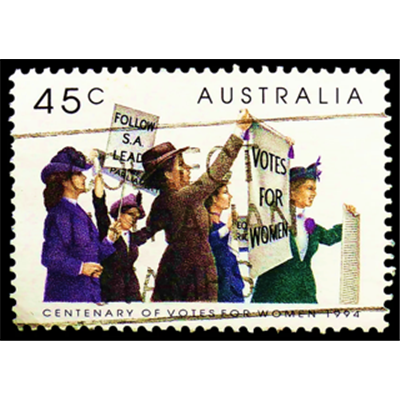 |
This talk charts the history and development of Australia since the first European settlement was formed in 1788 to its wealthy, talented and multicultural society of modern times. |
|
| Tuesday, 13 July 2027 |
| The Punch and Judy Show |
| Bertie Pearce |
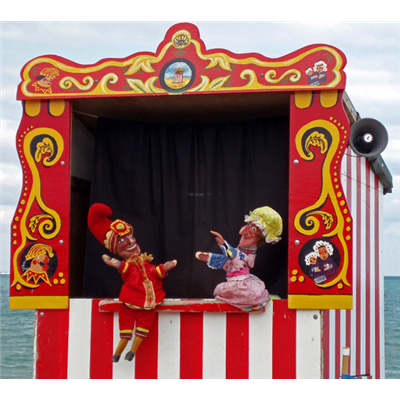 |
Mr Punch - th most famous puppet character of all time. His comic irreverence gave "Punch" magazine its' title. His anarchic vitality has inspired opera, ballet and punk rock and his enduring popularity has seen his likeness on goods ranging from Victorian silverware to computer video games. Appearing in England in 1662, Punch is descended from the Italian Clown Pulcinella of the 15th century Commedia Del'Arte tradition. Even today this Lord of Misrule uses his slapstick to dispense with oppressive authority, be it politicians, political correctness or the devil while producing his notorious refrain "That's the way to do it!". |
|